Understanding What Are Capital Allowances on Commercial Property
Capital allowances are a form of tax relief administered by HM Revenue & Customs (HMRC) that allow commercial property owners to write off the cost of qualifying assets against their Corporation Tax or income tax liabilities. When you own, buy, or build commercial premises, a significant portion of what you spend is actually tied up in embedded items rather than just bricks and mortar. Most business owners miss out on these reliefs because traditional accounting methods overlook the hidden value tucked away inside their buildings.
Thom Tax operates as the front end to establish whether a claim exists for your property, bridging the gap between your everyday accounts and specialised tax relief. Specialist partners then carry out the detailed survey and the claim itself, ensuring everything is fully compliant and optimised.
Here is why capital allowances matter for your business:
- They reduce your overall Corporation Tax liability by turning hidden building costs into direct tax deductions.
- They apply to a wide range of commercial buildings, including offices, retail units, industrial warehouses, and hospitality venues.
- They can often uncover substantial historical tax relief for properties you have owned for years.
- They help improve your cash flow by unlocking funds that are otherwise locked inside your physical assets.
Many property owners assume that capital allowances only apply when a building is brand new. In reality, historical expenditure on older properties can frequently yield substantial claims if the allowances have not been properly pooled or lost through previous transactions. You do not need a newly constructed skyscraper to qualify. Even modest commercial premises often contain years of unclaimed tax relief hidden in plain sight.
The process starts with a straightforward evaluation of your property type, expenditure, and purchase date. Instead of leaving you to navigate complex tax legislation alone, Thom Tax performs an initial free property check to establish whether a capital allowances claim is likely. If the numbers add up, we hand your file over to our specialist partners who handle the technical survey and the final submission to HMRC.
To explore more about the physical components inside your building, read our guide on Integral Features & Qualifying Assets. If you are wondering how first-year allowances interact with these assets, review AIA vs Full Expensing. For structural costs outside of plant and machinery, take a look at Structures and Buildings Allowance (SBA). Understanding how pooling rules affect your portfolio is also covered in Mandatory Pooling & Property Purchase Requirements.
Qualifying Assets: Fixtures, Fittings, and Integral Features
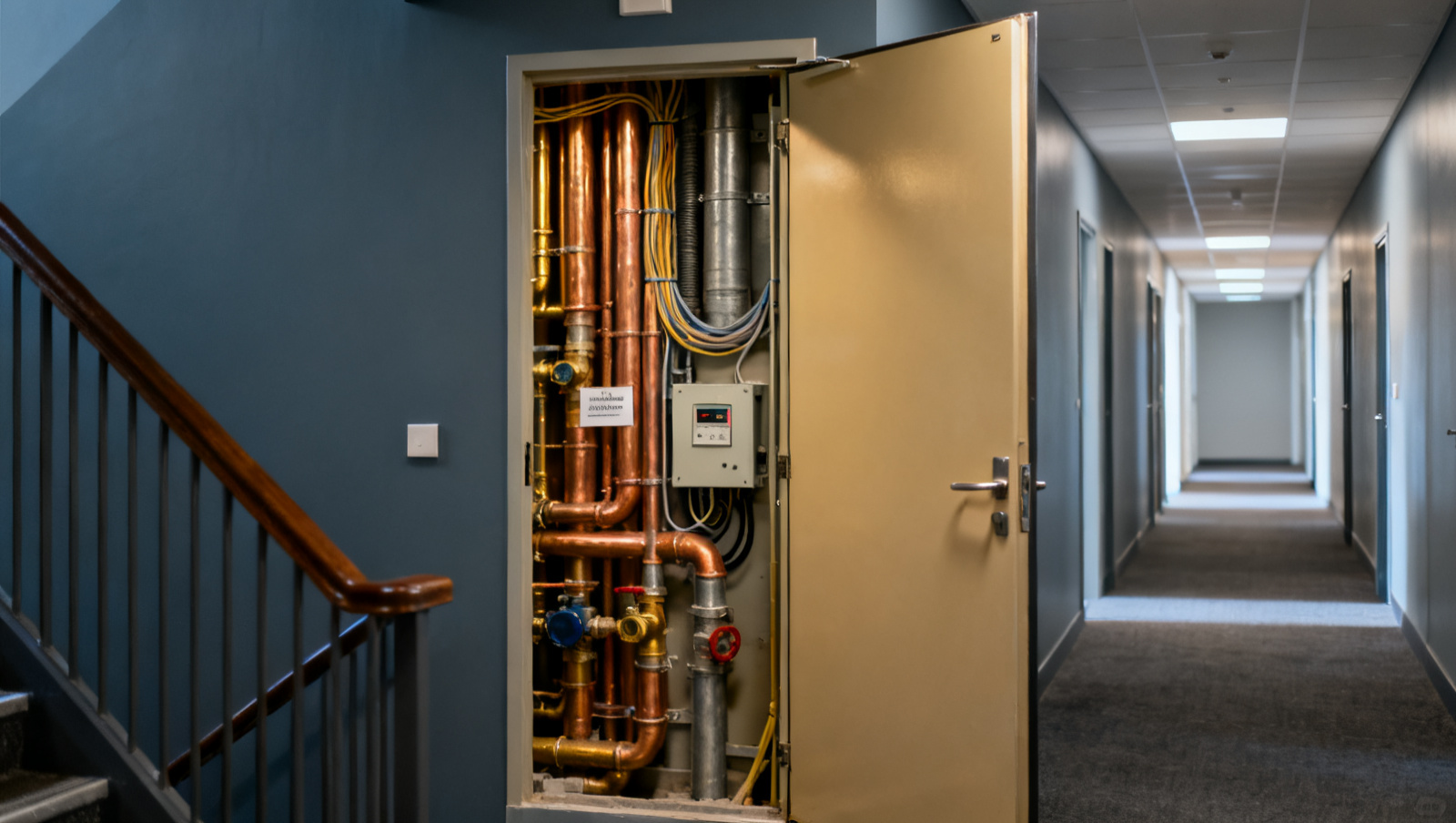
Fixtures and fittings capital allowances allow you to claim tax relief on the embedded plant and machinery items installed within your commercial property. HM Revenue & Customs (HMRC) permits businesses to separate the building structure from the functional assets that make the building usable. These qualifying assets go far beyond loose furniture and carpets, reaching deep into the essential systems that keep your operations running every single day.
When Thom Tax reviews your property profile, we look closely at these hidden assets to determine your eligibility before handing the project over to specialist surveyors. Identifying these items requires a granular engineering-based review rather than a simple scan of standard purchase invoices.
Consider the diverse range of items inside a typical commercial building that qualify for relief:
- Electrical systems, lighting circuits, and emergency power installations.
- Heating, ventilation, and air conditioning (HVAC) units throughout the facility.
- Sanitaryware, plumbing infrastructure, and hot water systems.
- Lifts, escalators, and security or fire alarm systems.
Failing to separate these fixtures from the structural purchase price means you lose out on valuable tax deductions year after year. Accountants often bundle these costs into general property values because detailed asset breakdowns require specialised surveying expertise. That is why engaging dedicated capital allowances specialists changes the financial outcome of your property ownership entirely.
The distinction between general pool assets and special rate pool assets dictates how quickly you can write down their value against your Corporation Tax bill. Main-rate items and integral features follow distinct statutory rules that dictate their annual writing-down allowances. Getting this classification wrong can trigger compliance queries, which makes professional oversight essential from day one.
To see how these rules apply across different asset pools, consult Special Rate Pool Asset vs Main Rate Pool Assets. If you operate in specific sectors, you can learn more through our breakdowns on Offices, Retail, and Industrial Warehouse Allowances and Hospitality and Care Homes Specialist Allowances. For insights on calculating these figures accurately, visit Capital Allowance Claim Calculators.
Navigating the Annual Investment Allowance (AIA) and Full Expensing
The Annual Investment Allowance (AIA) and Full Expensing are the primary mechanisms that allow qualifying companies to write off 100% of the cost of qualifying plant and machinery against their taxable profits in the year of purchase. Understanding how these reliefs interact with commercial property expenditure is essential for maximising your immediate tax savings. While the AIA provides a generous annual limit for all businesses, Full Expensing offers unlimited 100% first-year relief specifically for companies investing in qualifying main-rate plant and machinery.
Thom Tax helps you determine which allowance applies to your specific capital expenditure profile before connecting you with experts who draft the final claim. Knowing whether an asset belongs in the main rate pool or the special rate pool changes your immediate tax position dramatically.
| Relief Mechanism | Qualifying Entity Type | Annual Limit / Rate | Primary Application |
|---|---|---|---|
| Annual Investment Allowance (AIA) | Most businesses (companies, partnerships, sole traders) | Up to statutory limit per 12-month period | General plant, machinery, and integral fixtures |
| Full Expensing | Companies subject to Corporation Tax | Unlimited 100% first-year relief | Qualifying main-rate plant and machinery |
| Special Rate First-Year Allowance | Companies subject to Corporation Tax | 50% first-year relief | Special rate pool items and integral features |
Here are the key operational factors to keep in mind when using these allowances:
- The AIA applies to a broad range of business structures, whereas Full Expensing is restricted to incorporated companies.
- Integral features inside a commercial property often fall into the special rate pool, which has different first-year rules compared to main-rate plant and machinery.
- Timing your expenditure around your accounting period end date prevents unexpected restriction of your allowances.
- Failing to claim these allowances in the correct year can mean forfeiting immediate cash flow benefits.
Many business owners assume their routine property refurbishments are too minor to warrant a formal capital allowances review. However, combining multiple smaller fit-out projects over several years can accumulate into a substantial pool of unclaimed expenditure. Thom Tax establishes whether a claim exists across your past projects, while specialist partners execute the detailed site surveys required by HMRC guidelines.
For deeper guidance on how these reliefs affect property disposals, read Deferred Tax and Property Disposal Calculations. To understand the administrative steps required for submission, visit Filing Capital Allowances Claims with HMRC. If you want to review industry leaders who execute these surveys, check out Top Capital Allowance Specialists and Surveyors.
Long-Term Relief Through the Structures and Buildings Allowance (SBA)
The Structures and Buildings Allowance (SBA) offers flat-rate relief for eligible construction and renovation costs incurred on non-residential structures. Introduced by HM Revenue & Customs (HMRC) to fill the gap left by traditional plant and machinery allowances, the SBA ensures that foundational and structural expenditures do not go entirely unrewarded. While plant and machinery allowances write off asset costs quickly, the SBA provides a steady, long-term tax deduction over a multi-decade horizon.
Thom Tax identifies whether your historical construction or renovation expenditure qualifies for this baseline relief before handing your file over to specialist partners for formal quantification. Even if your building features fewer movable fixtures, structural modifications still hold significant tax value.
Key elements of the Structures and Buildings Allowance include:
- A flat annual rate of relief calculated on the original eligible construction cost.
- Applicability to commercial buildings, offices, retail spaces, and warehouses undergoing structural development.
- Strict requirements for chronological documentation, including clear contract costs and completion certificates.
- The rule that qualifying expenditure reduces the base cost of the property for future capital gains tax calculations upon disposal.
Claiming the SBA requires absolute clarity on construction timelines and expenditure dates. If a previous owner undertook structural works, tracing those historic costs demands specialist archival research and quantity surveying expertise. Without professional support, these long-term allowances remain locked away and inaccessible to your business.
Integrating the SBA alongside your fixtures and fittings claims creates a comprehensive tax strategy for your commercial property portfolio. Thom Tax provides the initial eligibility check to confirm your project dates align with statutory commencement rules. Once established, specialist surveyors map out the exact structural footprint to maximise your annual deductions.
For broader portfolio management insights, explore Property Portfolios & Landlord Tax Relief. To review historical recovery options, see Historical Expenditure & Unclaimed Allowances. When you are ready to speak with an expert, use our guide on Hiring Capital Allowance Surveyors.
Maximising Claims During Commercial Property Transactions
Commercial property transactions represent the most critical juncture for capital allowances, because missing a statutory requirement during a purchase or sale can forfeit the relief forever. Under rules introduced to curb duplicate claims, fixtures must be properly pooled by the current owner, and a mandatory fixed value or disposal value statement must be executed through a Section 198 or Section 199 election. If these steps are omitted from the sale contract, the entire chain of future owners loses the ability to claim allowances on those embedded fixtures.
Thom Tax acts as your initial screening partner during commercial property transactions to ensure your purchase or sale documentation protects your tax position. We then hand complex conveyance reviews over to specialist partners who negotiate the technical elections with the opposing party’s advisers.
Here are the critical actions required during property transactions:
- Verify whether the previous owner pooled the capital allowances within the statutory two-year window.
- Ensure formal S198 elections are embedded into the sale and purchase agreement before completion.
- Check that historical allowances have not been permanently locked or lost due to past unpooled transactions.
- Align your accountants and solicitors with specialist capital allowances surveyors prior to contract exchange.
Many buyers assume their solicitors automatically handle capital allowances during a acquisition. In practice, commercial property solicitors focus on legal title and environmental searches, leaving tax relief tracking outside their standard scope of work. Discovering that a previous owner failed to pool allowances after you have already completed the purchase is a costly mistake that cannot be easily undone.
Thom Tax ensures you catch these transactional risks early by running a quick, non-binding property check. We clarify whether your acquisition date falls post-April 2014, protecting you from permanent loss of relief. For further transactional details, read Selling Commercial Property & Capital Allowances. You can also coordinate your next purchase consultation via Book a Commercial Property Tax Consultation.
Evaluating the ROI of Hiring Professional Capital Allowances Surveyors
Engaging professional capital allowances surveyors delivers a clear return on investment by unlocking substantial historical tax relief while ensuring full compliance with HM Revenue & Customs (HMRC) standards. Capital allowances are complex engineering-based tax claims that require physical site inspections, quantity surveying analysis, and rigorous statutory reporting. Attempting to compile these claims without specialist help often results in underclaimed assets or, conversely, aggressive tax positions that invite HMRC scrutiny.
Thom Tax provides the accessible front-end check to establish whether a claim exists, removing the guesswork before you commit to any deeper investigation. Once we confirm your eligibility, our specialist partners carry out the detailed survey and deliver a fully substantiated claim ready for your Corporation Tax return.
Consider the practical advantages of bringing in specialist surveyors:
- They uncover hidden fixtures and integral features that standard accounting reviews miss entirely.
- They mitigate the risk of HMRC enquiries by providing fully defensible, evidence-based reports.
- They handle complex historical research for properties purchased years ago.
- They work on clear, results-aligned structures that align professional fees with verified financial outcomes.
Many business owners hesitate to pursue claims because they fear paying high fees upfront with no guarantee of success. Thom Tax eliminates this barrier by performing the initial eligibility check for free, giving you complete clarity on your potential claim before any commercial commitments are made.
Your building does not need to be a modern architectural masterpiece to qualify for significant tax relief. Ordinary commercial properties routinely yield impressive capital allowance values when examined through an engineering lens. Take the first step today by completing our online property check and let Thom Tax connect you with the right specialists for your portfolio.