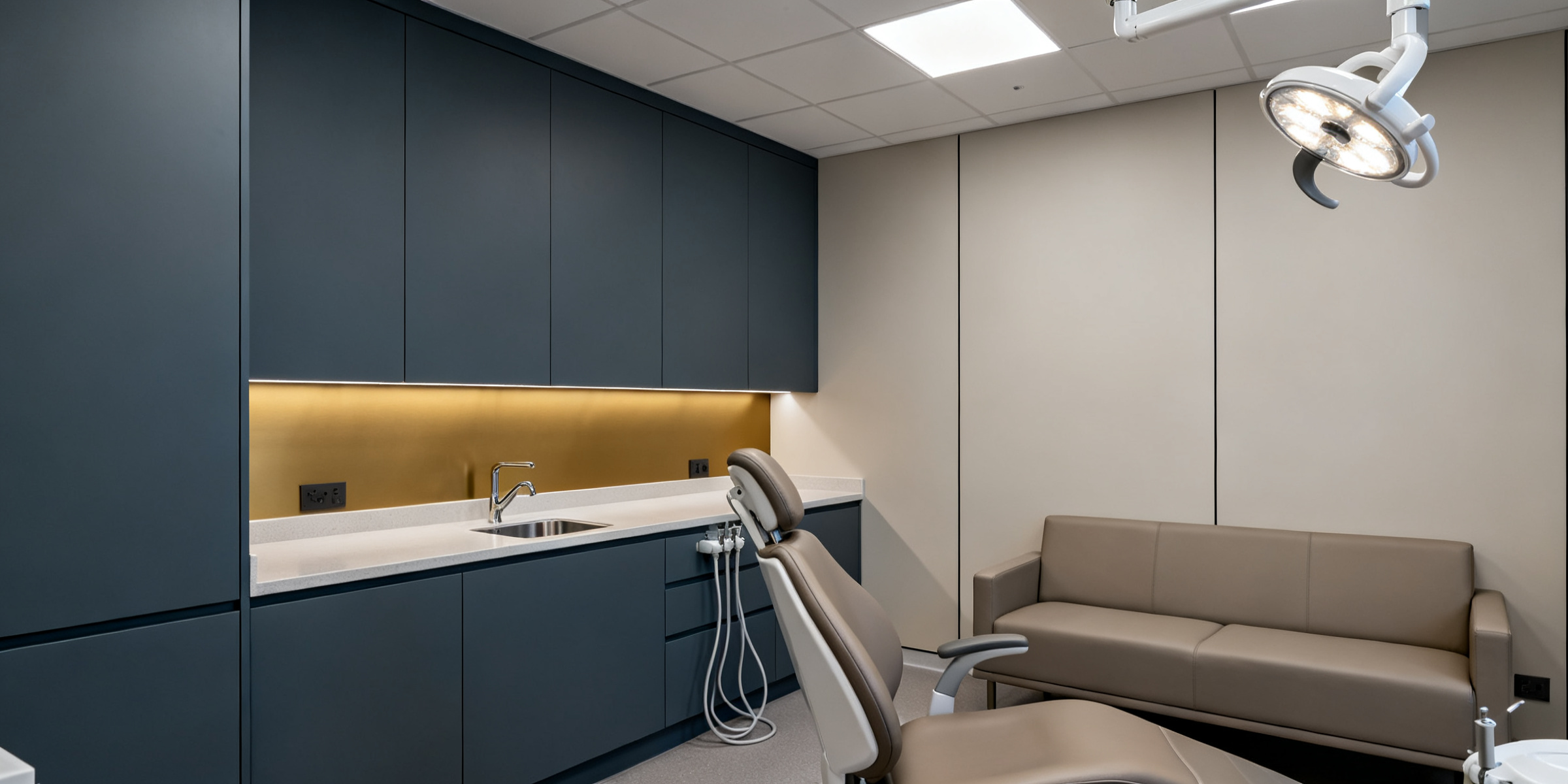
Capital allowances on surgeries and clinics
Medical and dental premises are offices with a great deal of specialist equipment attached to them, and the specialist part is where nearly all of the qualifying expenditure sits.
Check this property Medical and dental premises are offices with a great deal of specialist equipment attached to them, and the specialist part is where nearly all of the qualifying expenditure sits.
Check this propertyA treatment room is not a room with a chair in it. It is a room with dedicated ventilation, medical gas, specialist drainage, controlled lighting, sterilisation support and often shielding. Practices that have fitted out or extended tend to have spent heavily on exactly the things the legislation treats as plant, and because it was spent to meet clinical standards it is usually recorded as practice investment rather than examined for allowances.
Not an exhaustive list, and not every item applies to every building. What counts in your case is established by survey, not from a page.
Two premises of the same floor area can differ enormously here. A general office fit-out and a four-surgery dental practice cost very different sums, and the difference is almost entirely qualifying plant: the gas, the extraction, the drainage, the cabinetry, the sterilisation room. If the practice has been fitted out to a clinical standard, that specification is the reason the claim is worth investigating.
You own the premises and run the practice
Both the property and every fit-out and upgrade since are in scope.
You lease the premises and fitted them out
Very common in medical practice, and the expenditure is yours if you funded it.
You bought an existing practice
The fixtures came with it. What the transaction documented about them decides a great deal.
You added surgeries or treatment rooms
Expansion projects are usually heavily weighted towards qualifying plant.
What matters is whether the practice pays UK tax and who incurred the expenditure. The funding route for the work is a separate question worth establishing, because expenditure met by a grant or reimbursement is not expenditure you incurred.
It depends how it was constructed. Shielding built into the fabric is treated differently from a shielded enclosure installed into a room, which is exactly the kind of distinction a survey resolves.
Then the expenditure is almost certainly yours and worth looking at. Lease length does not prevent a claim.
Other property types
A few questions about the property. No cost, no obligation, and a straight answer either way.
Check this propertyFind out what it is holding
Free, no obligation
We use cookies to measure how the site is used and to make our advertising more relevant. You can say no and the site works exactly the same. Cookie policy