THOMTAX

Capital allowances on industrial and warehouse property

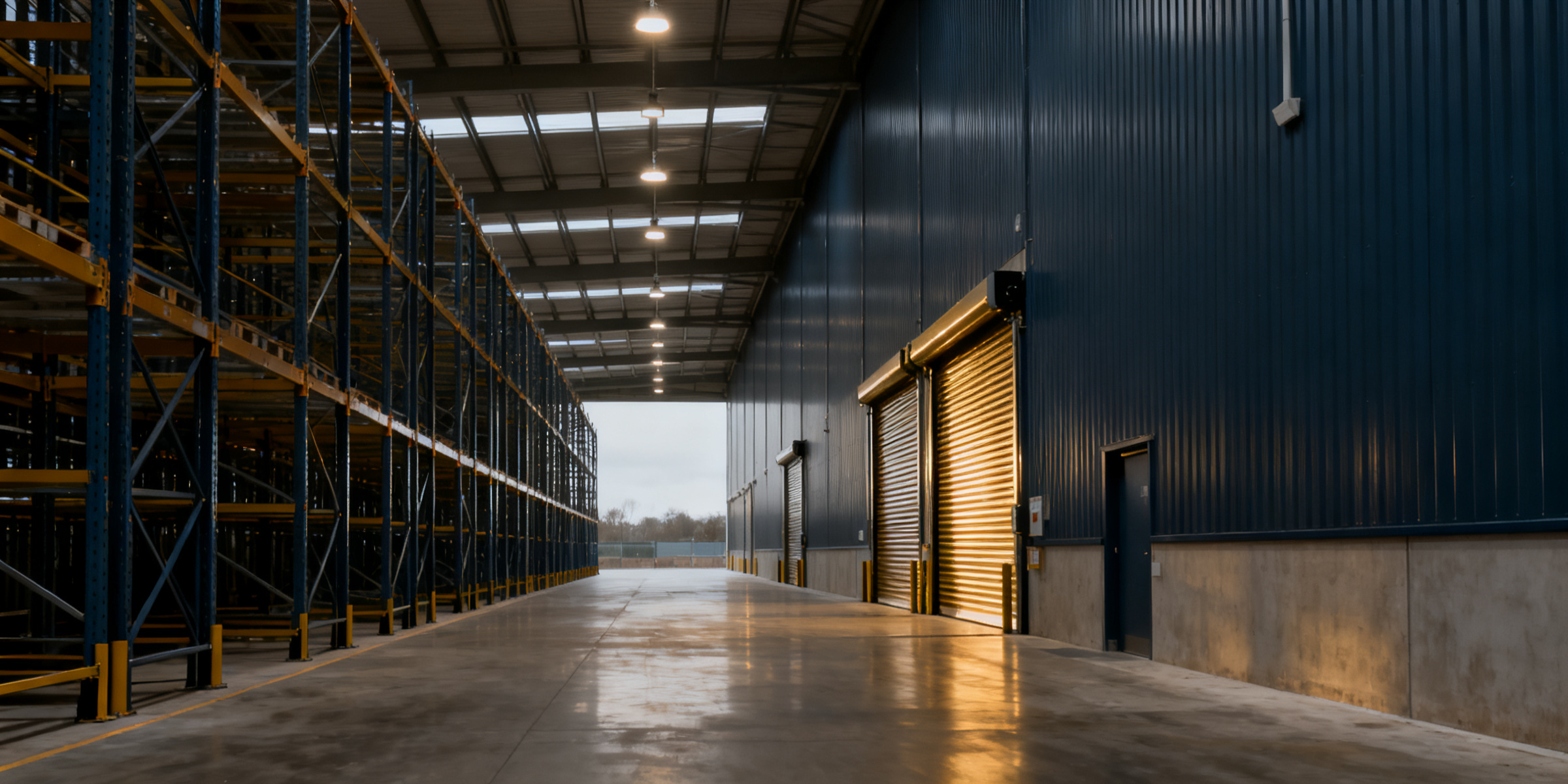
Industrial property is the type most often dismissed, on the reasoning that a shed is just a shed. That reasoning is wrong, and it is wrong by a large margin once you count what is bolted to it.

Check this property

A warehouse has less fit-out per square metre than a hotel, but it has a great deal more square metres, and the plant it does contain is expensive. High-bay lighting across 100,000 square feet is a serious number on its own. Add the doors, the levellers, the sprinklers, the offices built inside the envelope and the welfare block, and the picture changes.

What qualifies in industrial and warehouse

High-bay and warehouse lighting
Large areas mean large installations. LED replacement programmes are their own expenditure.
Roller shutter doors and dock levellers
Doors, motors, levellers, dock shelters and restraints.
Sprinklers and fire suppression
Often extensive in a high-bay storage building.
Heating, ventilation and destratification
Including radiant heating and fans.
Offices and mezzanines inside the envelope
An office pod inside a warehouse is a fit-out in its own right.
Welfare facilities
Canteens, changing rooms, sanitaryware and hot water.
Compressed air, cranes and hoists
Fixed plant serving the operation.
Security, access control and yard lighting
Barriers, gates, CCTV and external lighting.
EV charging and solar
More recent expenditure that is frequently missed because it sits in a different ledger.

Not an exhaustive list, and not every item applies to every building. What counts in your case is established by survey, not from a page.
Scale does the work here

In most property types the argument is about how much of the building is secretly plant. In industrial property the argument is simpler: there is genuinely less plant per square metre, but the areas are large and the individual items are costly. It is also the type where recent expenditure on lighting replacement, solar and EV charging is most likely to have been treated as a facilities cost rather than looked at for allowances.

Which of these is you

You own and occupy the unit

Both the original acquisition and everything you have installed since are in scope.

You lease the unit and installed racking, lighting or a mezzanine

Your expenditure, your allowances. Racking and mezzanines need looking at individually because treatment varies.

You are a landlord letting industrial units

Landlord works, estate infrastructure, yard lighting and shared services are all your expenditure.

You have run a lighting or solar replacement programme

Frequently posted as maintenance. Worth separating out, because much of it is capital and qualifying.

Questions we get about industrial and warehouse

It is basically an empty box. Surely there is nothing to claim?

That is the most common assumption in this sector and it costs the most. The lighting alone across a large floorplate is usually a meaningful claim, before anything else is counted.

Does racking qualify?

It depends on the racking and how it is installed. Some racking is plant, some forms part of the structure of a mezzanine, and the answer is a matter for the survey rather than a rule of thumb.

We installed solar panels last year. Is that separate?

Solar has its own treatment and sits in the special rate pool. It is worth looking at alongside everything else rather than in isolation.

Other property types

Find out what your unit is holding.

A few questions about the property. No cost, no obligation, and a straight answer either way.

Check this property

Find out what it is holding

Free, no obligation

Check your property