THOMTAX

Capital allowances on offices

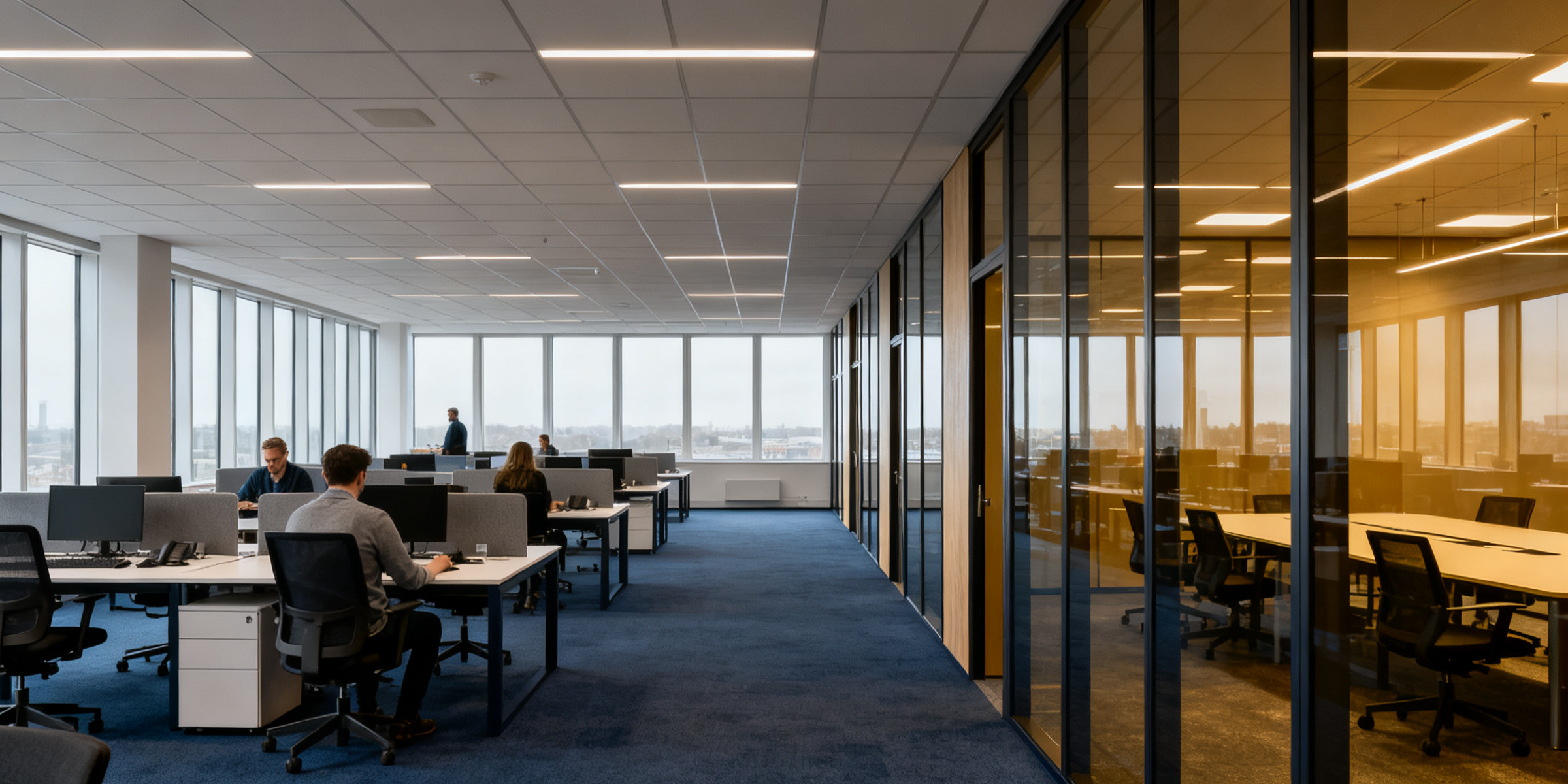
Offices carry more qualifying plant than most owners expect, because almost everything that makes an office usable was installed rather than built. The shell is structure. Nearly everything inside it is not.

Check this property

An office is the clearest case of the general rule. Strip out the floors, the walls and the roof and what is left is lighting, cooling, cabling and partitioning, all of which was bought and installed as equipment. On a purchase, that expenditure is sitting inside the price you paid and nobody has separated it out. On a fit-out, you have the invoices.

What qualifies in offices

Comfort cooling and ventilation
Usually the single largest item. Falls into the special rate pool as an integral feature.
Lighting and the electrical installation
The whole installation serving it, not just the fittings.
Data cabling and comms rooms
Structured cabling, racks, and the cooling that keeps the comms room alive.
Partitioning
Demountable partitioning generally qualifies. Fixed walls that are part of the structure do not.
Raised access floors and suspended ceilings
Where they house services rather than simply finish the space.
Kitchens, tea points and sanitaryware
Fitted units, plumbing and appliances.
Fire alarms, sprinklers and access control
Detection, suppression, door entry and CCTV.
Lifts and escalators
Special rate pool.

Not an exhaustive list, and not every item applies to every building. What counts in your case is established by survey, not from a page.

Cat A and Cat B are two separate pieces of expenditure

A landlord typically delivers Cat A: raised floor, suspended ceiling, basic lighting and cooling to an open shell. The tenant then pays for Cat B: partitioning, meeting rooms, the kitchen, the branding, the better lighting. Those are two different people spending two different sums, and the allowances follow each of them separately. It is very common for the Cat B spend to have been claimed by nobody at all, because the tenant assumed the relief belonged to whoever owned the building.

Which of these is you

You own the building and let it out

Your claim is on what you funded, which is normally the shell and the Cat A works, plus any subsequent landlord works or contributions to tenant fit-out.

You lease the floor and fitted it out

Your claim is on the Cat B spend you paid for. Lease length does not disqualify you.

You bought an office already fitted out

A share of the purchase price relates to the fixtures already in the building. Whether you can claim on it depends on the pooling and fixed value requirements if the purchase completed after April 2014.

You have refitted more than once

Each refit is its own expenditure, and superseded items may need writing out. Older refits that were never claimed are often still available.

Questions we get about offices

We only rent a couple of floors. Is it worth looking at?

Usually yes, if you paid for the fit-out. A two-floor Cat B fit-out is a real capital spend, and it is the kind of expenditure that most often goes unclaimed because nobody thinks of a tenant as the person who claims.

Does serviced or flexible office space qualify?

The operator who paid for the fit-out is generally the one with the expenditure. The question is who funded what, not what the space is called.

We are moving out and the landlord wants the space reinstated.

Reinstatement is normally a revenue cost rather than a capital one, which is a different relief and frequently missed. What happens to the fixtures you leave behind is a separate question worth answering before you sign anything.

Other property types

Find out what your office is holding.

A few questions about the property. No cost, no obligation, and a straight answer either way.

Check this property

Find out what it is holding

Free, no obligation

Check your property