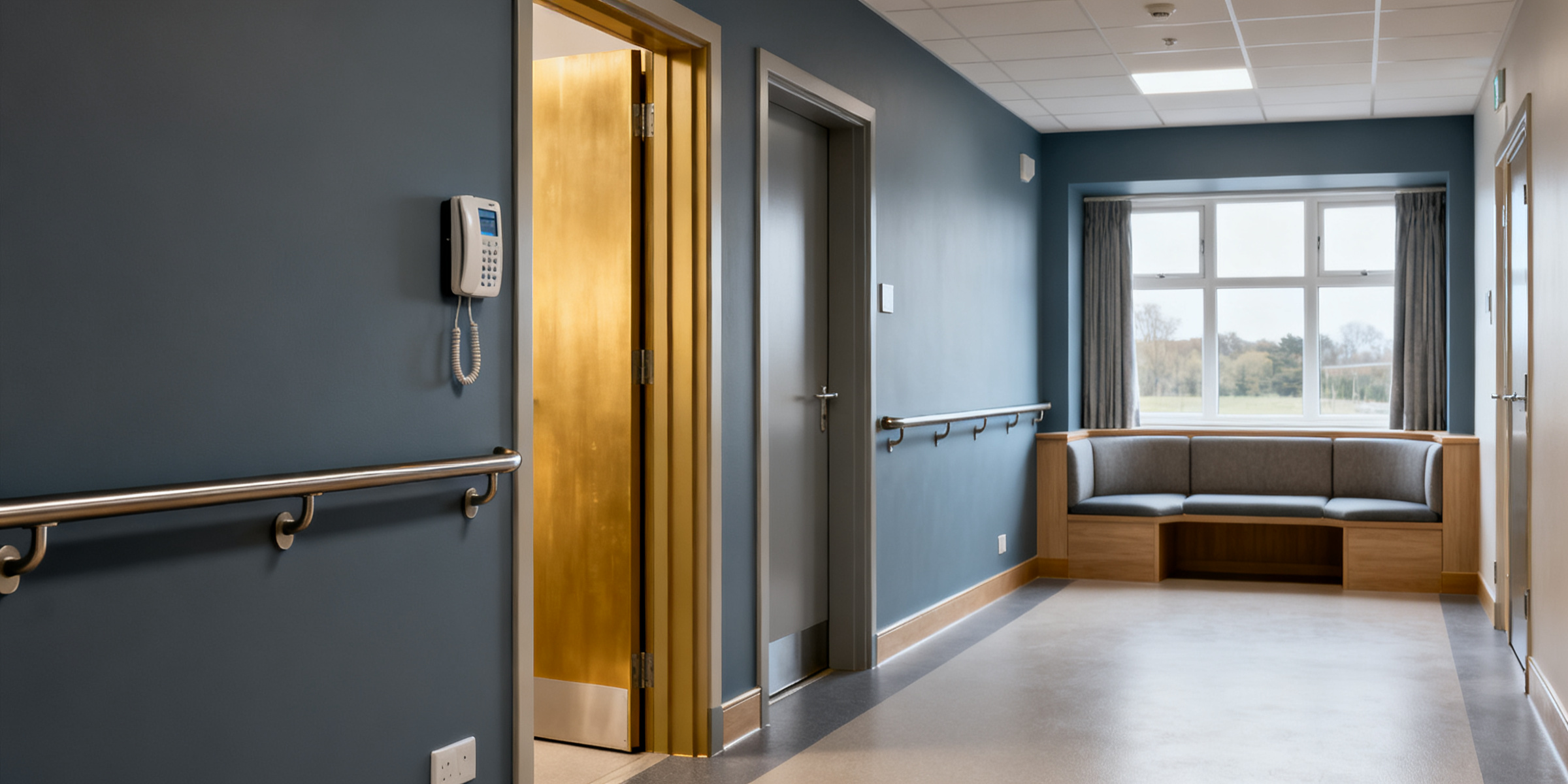
Capital allowances on care homes
A care home is a building full of equipment that exists to keep people safe and comfortable around the clock. Almost all of that equipment is qualifying plant, and a great deal of it is expensive.
Check this property A care home is a building full of equipment that exists to keep people safe and comfortable around the clock. Almost all of that equipment is qualifying plant, and a great deal of it is expensive.
Check this propertyCare homes combine hotel-level services with clinical requirements and 24-hour operation. That produces a plant list far longer than the building's size suggests: heating and hot water running continuously, lifts and hoists, call systems, sprinklers, commercial catering and laundry. Purpose-built homes and converted properties both tend to carry substantial claims, for different reasons.
Not an exhaustive list, and not every item applies to every building. What counts in your case is established by survey, not from a page.
A converted property, often a large older house, usually carries a higher proportion of qualifying expenditure than a purpose-built home of the same value, because nearly everything that made the conversion work had to be installed from scratch: the lift, the call system, the en-suites, the sprinklers, the commercial kitchen. Where a home was bought as a trading business, the fixtures came with it and their treatment depends on what the transaction documented.
You own and operate the home
The acquisition, the conversion or build, and every upgrade since are all in scope.
You bought an operating home
The fixtures transferred with the business. The pooling and fixed value requirements decide what you can claim on a post-April-2014 purchase.
You lease the building and fitted it out
Operators who fund their own equipment and adaptations claim on that expenditure.
You have extended or upgraded to meet regulation
Regulatory upgrades are usually capital expenditure on plant and are frequently recorded as compliance cost rather than examined.
Communal residential care accommodation is generally not treated the way a dwelling-house is, so the plant in it is usually in scope. The precise position depends on the nature of the accommodation and is worth establishing early.
Very often yes. Conversion expenditure that was never pooled can generally still be brought into account while you continue to own the property.
Fire suppression is generally qualifying plant, and in a care home it is usually a substantial installation.
Other property types
A few questions about the property. No cost, no obligation, and a straight answer either way.
Check this propertyFind out what it is holding
Free, no obligation
We use cookies to measure how the site is used and to make our advertising more relevant. You can say no and the site works exactly the same. Cookie policy